What Colonists Drank: Cider, Small Beer, and the Household That Brewed Its Own

John Adams drank a tankard of hard cider every morning for most of his adult life. He credited it for his health and saw nothing unusual about the habit. In the colonial household, he was right on both counts.
For most of colonial America, fermented beverages were not a luxury or an indulgence. They were food. Hard cider, small beer, and their many variations provided calories, warmth, and a form of sanitation in a world where the connection between contaminated water and illness was understood empirically, if not yet scientifically. Certain water sources made people sick. Cider and beer drinkers were spared. The conclusion was reasonable: fermented drinks were often the safer choice. The household that kept a full cellar going into winter was a household that had managed its domestic life well.
The Cider Cellar as Infrastructure
The apple orchards of New England were not planted for pleasure. By the early eighteenth century, hard cider had become the dominant household beverage across New England and the Mid-Atlantic. It was embedded in the architecture of farms, the rhythm of the agricultural year, and the social life of every community from barn-raisings to church meetings to funerals.
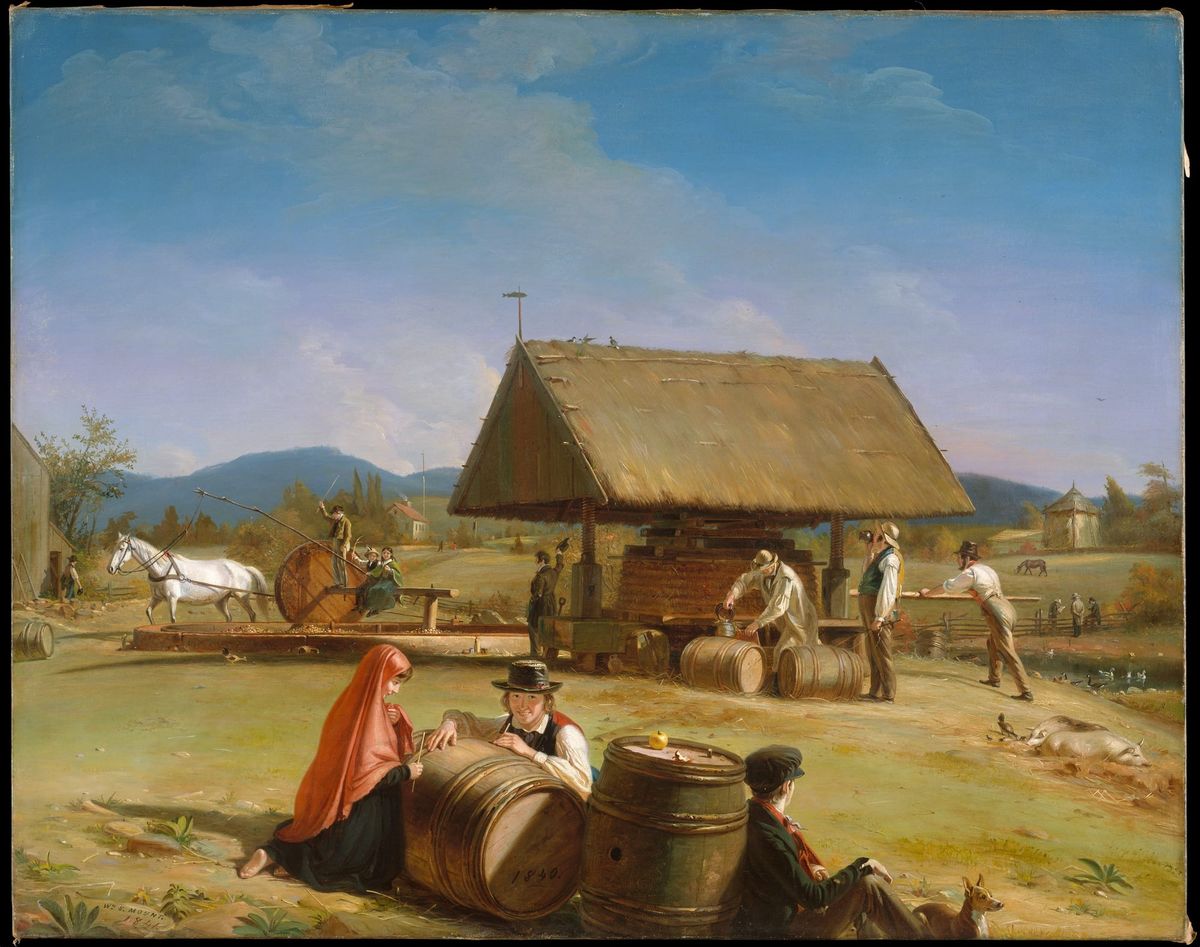
The production calendar began in late September when apples were harvested and left to mellow for several days, softening and concentrating their sugars before milling. Early households mashed apples by hand in wooden troughs using wooden mallets. Larger farms and communities shared horse-powered circular millstones that rotated around stone troughs. The milled pulp, called pomace, was then layered with clean straw in a screw press, and the juice extracted into barrels for fermentation.
The standard storage vessel was the hogshead, holding roughly 110 gallons. A well-stocked New England farm cellar entering winter held multiple hogsheads of cider fermenting alongside barrels of strong autumn ale, with enough molasses on hand for weekly small beer batches through the cold months. Community cider pressing functioned as a social occasion in the same way barn-raisings did: neighbors helped neighbors, and the work and the product was shared.
Ciderkin, the weak liquid pressed from pomace after the main juice had been extracted, came in below one percent alcohol. It was considered especially suitable for children.
Small Beer and the Problem of Water
Alongside cider, small beer occupied the daily table as a hydration drink rather than a social one. Running at one to three percent alcohol, it was consumed the way water or buttermilk might be, at meals, between tasks, by everyone in the household including children and servants.
The reason was practical: in cities, water sources served double duty as waste disposal. Sometimes urban residents had to purchas cleaner water from the countryside as a commodity. In the Chesapeake, historian Sarah Hand Meacham documents that the region's water was foul, milk generally unavailable, and tea and coffee far too expensive for anyone outside the wealthy planter class. Small beer brewed from molasses and bran was not a treat. It was the alternative to drinking water that might make you ill.
George Washington understood this. Around 1757, while colonel of the Virginia militia, he recorded a small beer recipe in his military notebook, now held at the New York Public Library. The recipe calls for a large sifter of bran and hops boiled three hours, strained into thirty gallons of water, with three gallons of molasses added while the liquid was scalding hot. Yeast went in when the mixture had cooled to near body temperature. In cold weather, a blanket was thrown over the cooler to keep the fermentation going. The bung was left open until the beer nearly finished working, then sealed, and the beer bottled a week after brewing.
Mount Vernon's researchers note that this recipe was given to paid servants and enslaved workers. The finer beer was for those who could afford it. The Washington recipe is not a gentlemen's drink. It is a working household's solution to the problem of keeping people fed and hydrated through a Virginia winter.
Who Did the Work
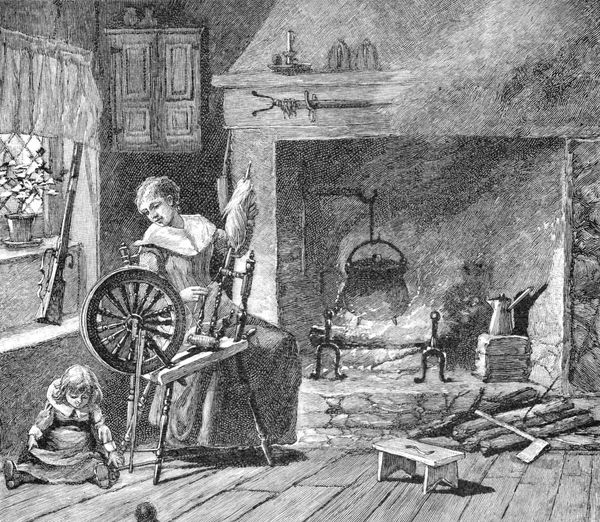
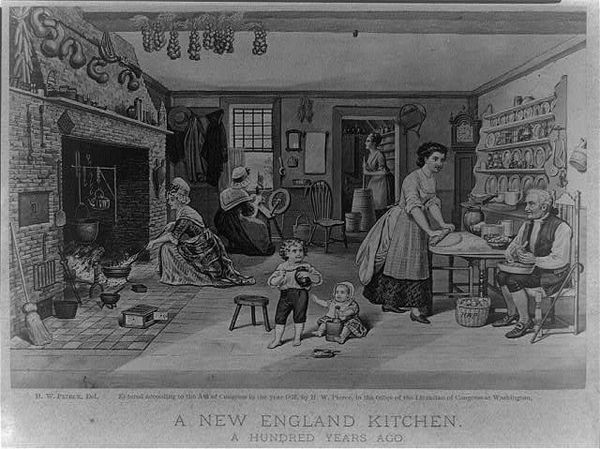
In the early colonial period, brewing and cider-making were primarily women's work. Household guides directed women in fermentation and distillation as a standard part of domestic management, and women managed production from apple pressing through bottling and cellar maintenance.
The shift came in the eighteenth century, particularly in the Chesapeake, as cider-making equipment became cheaper and production began moving toward surplus and market sale. When brewing and pressing became commercially viable rather than purely domestic, men moved into the space women had managed. It is worth noting that this pattern held specifically in the Chesapeake; New England and Mid-Atlantic labor arrangements differed by region and by household.
Children participated in the work as part of ordinary domestic labor: hauling water, stoking fires, moving vessels, and doing the physical work that production at this scale required. Drinking the product was also considered entirely unremarkable. Harvard College served beer with breakfast to its students as a routine institutional provision. By 1703 the college maintained three campus breweries.
Peter Hemings and the Monticello Brewery
The most specific and striking brewing story from this period comes not from a New England farmhouse but from Monticello, and it begins with Thomas Jefferson's wife Martha.
Martha Jefferson brewed fifteen-gallon batches of beer approximately every two weeks in the early years of their marriage. After her death in 1782, brewing at Monticello declined until Jefferson, in his retirement, designed a formal brewery on the property and around 1813 hired an English master brewer named Joseph Miller to establish it properly.
Jefferson assigned an enslaved man named Peter Hemings, already accomplished as a cook, to train under Miller and learn the craft. Jefferson's correspondence describes Hemings learning with what he called "entire success" and "great intelligence and diligence." By 1820, Jefferson was writing to James Madison to refer to Hemings simply as "our malter and brewer," a formalized skilled role in the household economy. Visitors to Monticello praised the beer and requested the recipe.
Historians have described Hemings as likely the first Black person in America to receive formal professional brewing training. The claim comes from brewing history rather than peer-reviewed scholarship, and should be understood as such. What the documentary record confirms is that a man held in bondage became, through skill and instruction, the keeper of one of the most admired household breweries of the early republic, and that Jefferson documented his expertise in his own hand.
What the Cellar Looked Like
The equipment of household brewing appears consistently in colonial probate inventories, though its frequency varied significantly by region. In York County, Virginia, hops appear regularly in inventories even where malted barley does not, suggesting that small beer from molasses and bran was brewed even in households without access to grain. Governor Botetourt's household accounts from 1768 Williamsburg record hops and yeast purchases for small beer alongside a half-barrel of molasses beer already in the cellar.
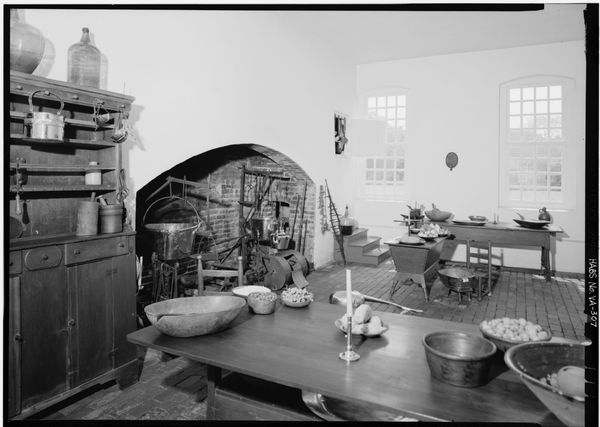
A complete household brewing setup included a large copper or iron kettle for boiling, a wooden mashing tub for steeping grain, a shallow cooling vessel called a cooler for bringing the wort down to the temperature at which yeast could work, a fermentation vessel with the bung left open during active working, and storage casks for moving the finished beer to the cellar. Bottles, corked in glass or stoneware, held the final product. Food in Colonial and Federal America by Sandra Oliver covers this in greater detail if your are interested in further reading.
In New England, the architectural evidence is still visible. Many of the oldest surviving American houses show a lower roofline jutting from the main building: the brew room addition, isolated from the main structure for the same reason the Virginia plantation kitchen was a separate outbuilding. Fire and heat were managed risks in the colonial household, and the brewery was treated accordingly.
The Beginning of the End
By 1820, the world that made household brewing a necessity was beginning to shift. German and Dutch commercial brewers in Philadelphia had been producing grain beer since the mid-eighteenth century. Jefferson's decision to hire a professional English brewer and train a skilled enslaved worker in the craft signals something about where the knowledge was moving: out of women's domestic management and toward a specialized, commercial model.
The temperance movement of the 1810s and 1820s focused initially on distilled spirits, treating fermented cider and beer as wholesome alternatives. That position did not hold. The factors that would end American cider culture were gathering: urbanization separating families from orchards, German immigration driving demand for lager-style beer, and a temperance movement hardening its position against all alcohol by the 1830s.
But in 1820, a well-run New England farm cellar still held its hogsheads of autumn cider working through the winter, its barrels of small beer, its store of molasses for the next batch. The household that managed that cellar well was a household that would eat and drink adequately through to spring. John Adams knew this. So did Peter Hemings.
Curious about the material world of colonial American homes? The Colonial Hearth Letter arrives every week with one new discovery from the archive: a period recipe, a household object, a primary source find. Subscribe free at americancolonialhome.com